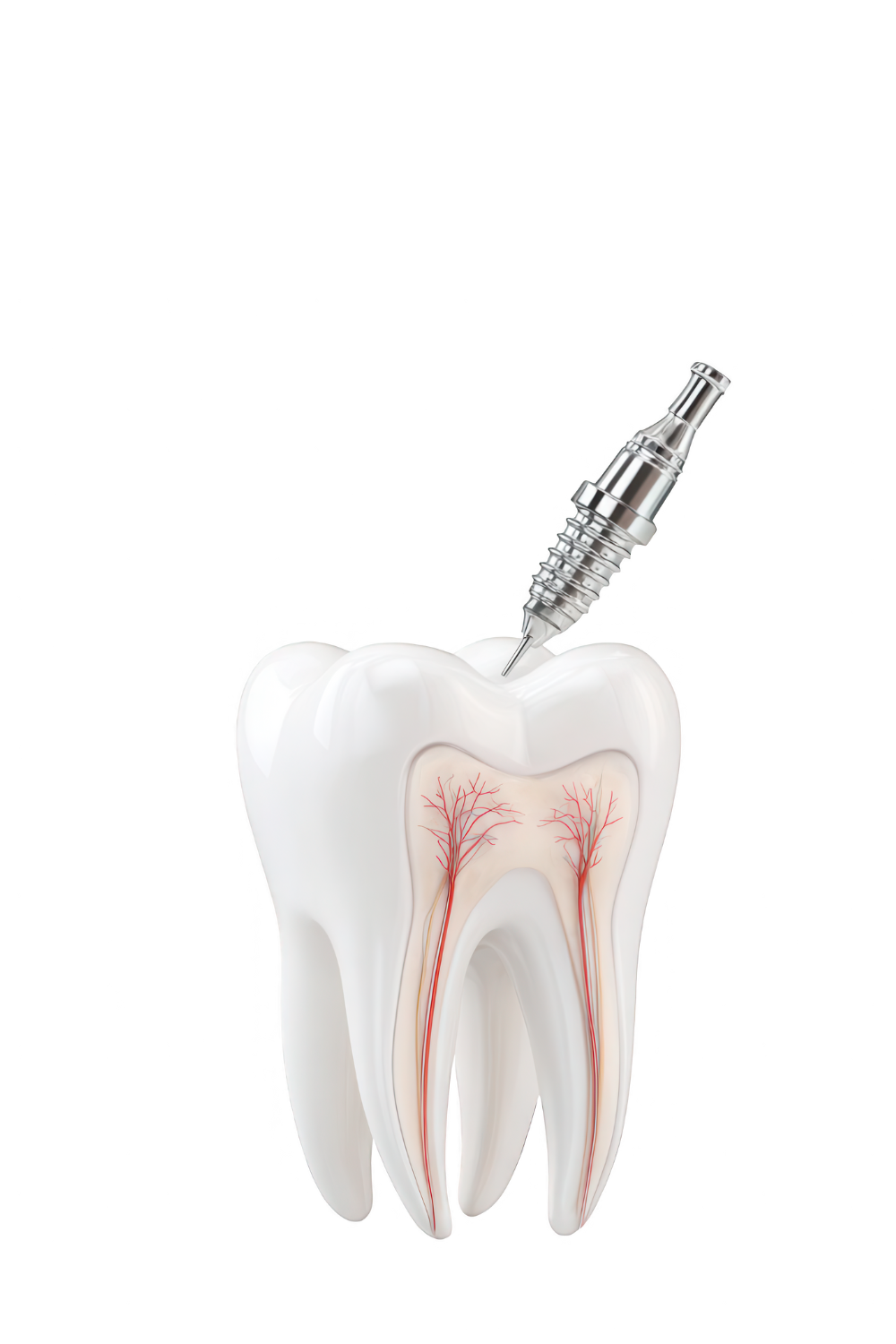
Understanding Tooth Damage
The tooth might appear as a result of deep root cavity, fractures, trauma, or discolouration of pulp as a result of pulp infection. The root and bone may be healthy enough to support restoration, although the visible (the crown) part may be damaged.
The most important thing in the tooth saving is the structural basis existence. In most cases, restorations can be done even when the decay is very severe provided that there is sufficient healthy tooth structure left.
The benefits of the Root Canal Treatment.
In case of infection or inflammation of the pulp within the tooth, pain and structural weakness are experienced. Root canal therapy involves removal of infected tissue and cleansing the inside of the canals ensuring that the area is not vulnerable to reinfection.
After the infection is gone, the tooth can be restored with the help of restorative methods like dental crowns. This makes the remaining structure stronger and reinstates the normal chewing functionality.
When a Tooth Could Yet Be Saved.
Even a damaged tooth can be saved in case:
The root structure is stable
There is sufficient bone support.
Fissures never go into areas that are repairable.
Periodontal circumferential gum is healthy.
The careful examination at a qualified Dental Clinic Mysore assists in the decision of whether the tooth can be salvaged or not. Before making a decision, the condition of the root and bone is examined with the help of digital X-rays and clinical examination.
Role of Dental Crowns
Dental crown is normally laid on top of the treated tooth after root canal therapy. The crown supports the weak structure and makes it stronger, shaped and attractive. Crowns in modern worlds are imagined to resemble natural teeth, and they are not only durable but even more attractive.
In most instances, a tooth that may seem badly damaged can be used in normal functioning several years following good remedies and restoration.
In Case Extraction might be required.
Root canal treatment can rescue most of the damaged teeth, however, there are some cases when the extraction may be needed:
Fragments of the bone reach deep into vertical roots.
Extensive bone loss in the root.
Structural collapse that is irreparable.
Even under such circumstances, early analysis augments the possibility of finding alternative solutions before a lot of damage is done.
Advantages of Saving the Natural Tooth.
The benefits of saving your natural tooth are:
Keeps the teeth of a natural size.
Eliminates sliding of neighboring teeth.
Maintains the structure of the jawbone.
No need of implants or bridges.
Promotes oral health in the long run.
The best they can do is to save natural teeth when they can be safely saved.
Dispel Common Misconceptions.
Most of the time, individuals assume that a tooth with a dark appearance or a broken one cannot be restored. Factually, being infected internally is known to be the primary cause of discoloration, which can be fixed once the treatment is carried out. Contemporary dentistry is concerned with conservation instead of removal as much as it can.
Early Diagnosis Is Crucial
The sooner the infection is treated, the higher the chances of restoration. There is the risk of failing to save the tooth by means of delaying treatment to make the structure weaker.
Conclusion
Root canal treatment frequently allows the survival and recovery of a tooth that seems to be utterly damaged. Dentists can restore functionality and appearance of the structure by removing infection and strengthening the structure with a crown. The advanced diagnostic tools and tailor-made care plans at Umbrella Aesthetics assist in making a decision on whether the tooth in question could be safely salvaged and guarantee a stable and healthy state of the oral health in the long run.